How Long to Bake Sweet Potatoes in the Oven?
A whole baked sweet potato is one of the simplest sides you can put in the oven, but the right time depends on both your oven temperature and the size of the potato itself. Weigh or eyeball your sweet potatoes, find the matching row below, and set the timer on this page to that value so you're not stabbing at them every few minutes to check. Sweet potatoes are also a noticeably richer source of beta-carotene than either regular potatoes or true yams, which is part of why they taste sweeter and bake up with that deep orange color.
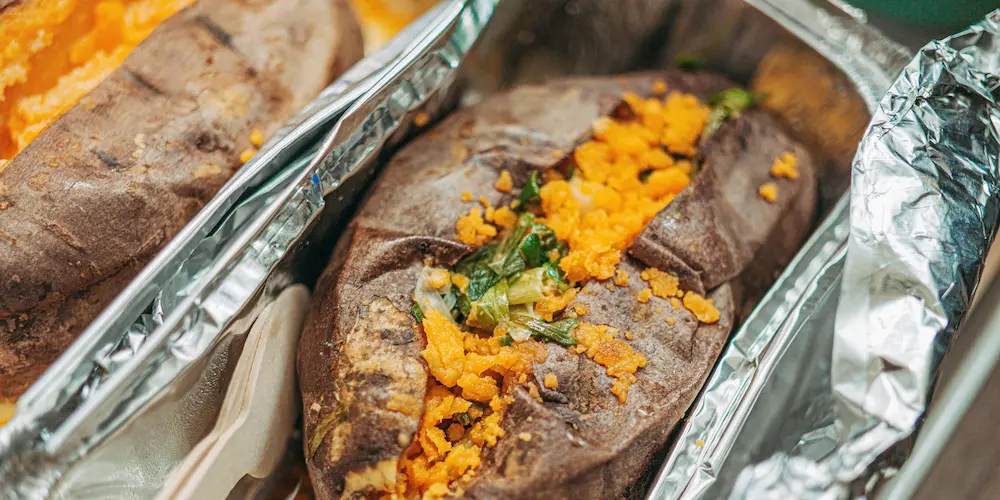
A baked sweet potato pairs naturally with classic oven or grill mains — chicken breast and ribs both work well alongside it as the starchy, slightly sweet counterpoint to something savory.
Below you'll find times by oven temperature and by size, times for fries and wedges too, whether to wrap sweet potatoes in foil, why piercing them before baking is actually different advice than for regular potatoes, how to check doneness, and the long-running mix-up between sweet potatoes and true yams.
Baking Time by Oven Temperature
Oven temperature and baking time move together here: a hotter oven gets sweet potatoes done faster, but it also gives you noticeably more caramelization on the skin and cut edges, since the natural sugars have more direct heat to brown against. A cooler oven takes longer and produces a milder, less caramelized skin. Neither is wrong — pick based on how much caramelized flavor and texture you want on the outside.
| Oven Temperature | Baking Time |
|---|---|
| 375°F (190°C) | 75+ minutes |
| 400°F (205°C) | 60–75 minutes |
| 425°F (220°C) | 45–60 minutes |
Baking Time by Size at 425°F (220°C)
Temperature is only half the picture — size is the other, and it matters just as much. Here's how long sweet potatoes take at a hot 425°F (220°C), sorted by size:
| Size | Baking Time (425°F/220°C) |
|---|---|
| Small (~4oz/110g) | 30–35 minutes |
| Medium (5–8oz/140–225g) | 40–45 minutes |
| Large (8–12oz/225–340g) | 55–65 minutes |
Once you've sorted your sweet potatoes by size, switch the timer on this page to the value from whichever row matches and let it run. Doneness is easy to check without a thermometer: a knife or fork should slide into the center with no resistance at all. If it catches partway through, give it another 5–10 minutes and check again.
Sweet Potato Fries and Wedges

Cut into fries or wedges, sweet potatoes cook noticeably faster than a whole one, and the two cuts need slightly different times of their own. Thin fries, cut into sticks about 1/4 to 1/2 inch (0.5–1cm) thick, bake at 400–425°F (205–220°C) for 20 to 25 minutes, tossed or flipped halfway through. Thicker wedges, cut into 6 to 8 pieces per potato, need a bit longer: 25 to 30 minutes at 425°F (220°C), or 30 to 35 minutes at 400°F (205°C), also flipped halfway.
Sweet potato fries resist getting crispy more than regular potato fries do, since sweet potatoes hold more moisture and sugar. A light toss in cornstarch before the oil goes on helps noticeably — it pulls surface moisture out and gives the fries something to crisp against, closer to an actual fry than a soft baked stick. Spread the pieces in a single layer with space between them; crowded fries steam instead of browning, the same problem as an overcrowded pan of whole potatoes.
Foil or No Foil?
This is a genuine tradeoff, not a mistake to avoid — and it's worth calling out because the advice is different from regular baked potatoes, where skipping foil is usually the clear better choice. With sweet potatoes, both approaches give you a good result; they just give you a different one.
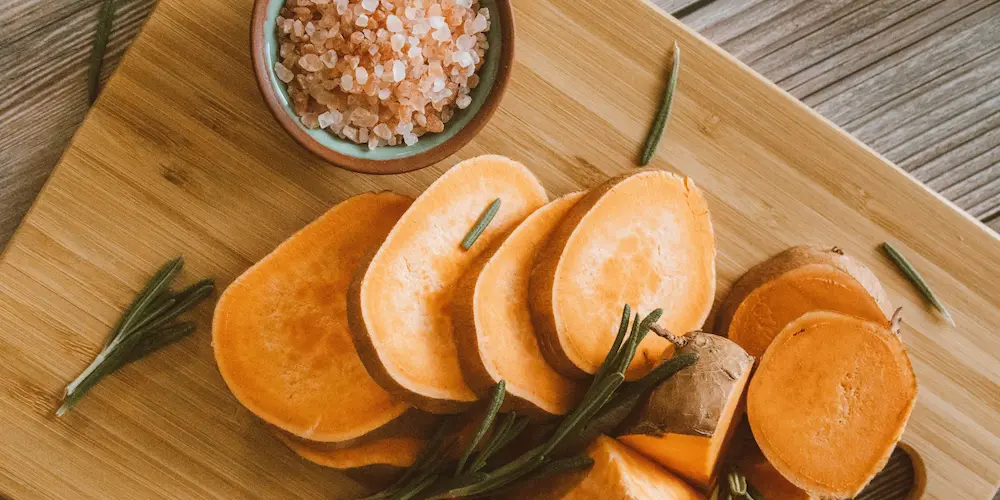
Bake without foil and moisture escapes freely, letting the surface sugars caramelize against the direct heat. The skin gets crispy, and the flavor comes out more intense and slightly smoky at the edges. Wrap them in foil instead and the potato essentially steams inside its own wrapper — the flesh comes out softer and more uniform from end to end, which is convenient if you're mashing it or scooping it out for a filling, but you won't get any caramelization or crisp skin that way. Choose based on what you want on the plate, not on which one is "correct."
Should You Pierce Sweet Potatoes Before Baking?
This is another spot where sweet potatoes genuinely part ways with regular potatoes, so don't assume the same rule applies to both. For regular potatoes, piercing with a fork before baking is standard precaution against the skin bursting from built-up steam — something that rarely actually happens, but the habit persists anyway. For sweet potatoes, piercing works against you: the extra punctures let more steam and sugar escape while baking, leaving the flesh drier and noticeably less sweet than a potato baked with its skin left intact. If you want the fullest flavor, leave the skin unpierced and let the oven do its work.
Useful Tips for Baking Sweet Potatoes
A few small habits make baked sweet potatoes noticeably better and easier to plan around.
- Plan on one medium sweet potato per person as a standard side-dish portion — size up for bigger appetites or if you're serving them alongside a lighter main.
- Set them on a baking sheet, not directly on the oven rack. Sweet potatoes tend to ooze caramelized juices as they bake, and those drip onto the rack and burn if there's nothing underneath to catch them.
- Rub the skin lightly with oil before baking if you're going the no-foil route — it helps the skin crisp more evenly and keeps it from drying out into something leathery.
- Storing and reheating leftovers: keep baked sweet potatoes in an airtight container in the fridge for about 5 days. They freeze well too, for a couple of months — it's best to mash them or scoop the flesh from the skin before freezing. To reheat without drying them out, warm them in a low oven around 300°F (150°C) wrapped in foil, or give them a quick burst in the microwave with a damp paper towel over the top, rather than a long stretch at high heat.

Fact
Sweet potatoes are a meaningfully richer source of beta-carotene, the provitamin A compound that gives them their deep orange color, than either regular potatoes or true yams. It's a big part of why sweet potatoes have earned a reputation as a more nutrient-dense choice, though it's worth keeping in perspective as one supporting detail rather than a cure-all.
Sweet Potato or Yam? Clearing Up the Mix-Up
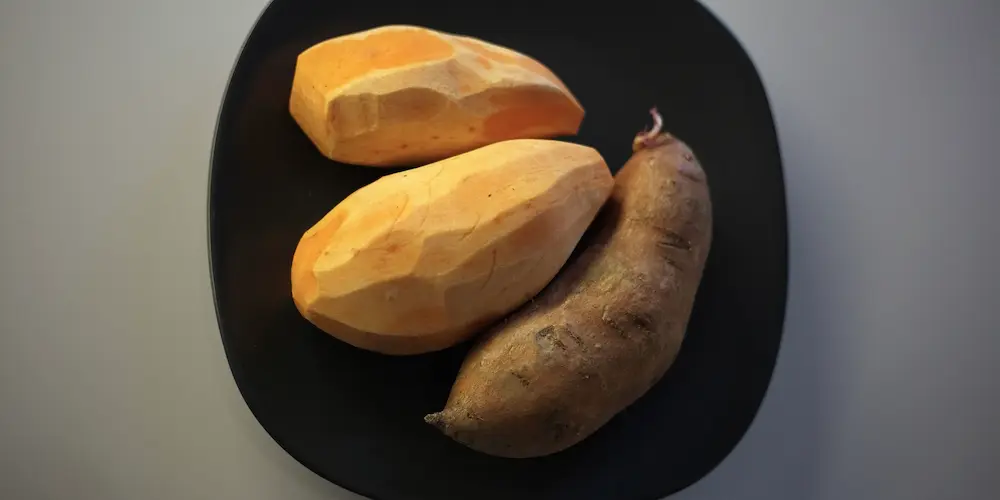
What's sold labeled "yam" in most US grocery stores is, almost without exception, botanically a sweet potato. True yams are a different plant entirely — starchier, drier, and covered in rough, bark-like skin — and they're rarely found in regular retail in the US at all. The mix-up traces back to a decades-old marketing decision meant to distinguish orange-fleshed sweet potato varieties from paler ones, and the "yam" label simply stuck. It's a long-standing labeling quirk, not a biological fact, so don't be surprised that the "yams" in your produce aisle are sweet potatoes after all.
Frequently Asked Questions
Here are quick answers to the questions that come up most often when baking sweet potatoes.
Should you wrap sweet potatoes in foil before baking?
It's a genuine tradeoff rather than a right-or-wrong choice. Baking without foil lets moisture escape so the skin gets crispy and the flavor turns more intense, while foil steams the potato inside its wrap for softer, more uniform flesh with no crisp skin or caramelization. Pick whichever result you actually want on the plate.
Do you need to pierce sweet potatoes with a fork before baking?
No, and it's actually better if you don't. Piercing lets extra steam and sugar escape through the punctures, which leaves the flesh drier and less sweet than baking the potato with its skin left intact. This is different from regular potatoes, where piercing is a standard precaution rather than something that hurts the result.
How long do you bake a sweet potato by size?
At 425°F (220°C), a small sweet potato around 4oz (110g) takes 30–35 minutes, a medium one at 5–8oz (140–225g) takes 40–45 minutes, and a large one at 8–12oz (225–340g) takes 55–65 minutes.
What's the difference between a sweet potato and a yam?
They're different plants. What's labeled 'yam' in most US grocery stores is almost always botanically a sweet potato, since true yams are starchier, drier, and covered in rough, bark-like skin, and are rarely sold in regular US retail. The labeling is a long-standing marketing habit rather than a biological distinction.
How do you know when a baked sweet potato is done?
A knife or fork should slide into the center with no resistance. If it catches or meets any firmness partway through, give the potato more time and check again.
What oven temperature is best for caramelized sweet potatoes?
Go with 425°F (220°C). The higher heat browns the natural sugars on the skin and cut edges more aggressively than a cooler oven, giving you a shorter bake time and noticeably more caramelization at the same time.
How many sweet potatoes should you plan per person?
One medium sweet potato per person is a standard side-dish portion. Size up if you're serving a lighter main or feeding bigger appetites.
How long do you bake sweet potato fries or wedges?
Thin fries, cut about 1/4 to 1/2 inch (0.5–1cm) thick, take 20 to 25 minutes at 400–425°F (205–220°C). Thicker wedges need a bit longer: 25 to 30 minutes at 425°F (220°C), or 30 to 35 minutes at 400°F (205°C). Flip or toss either cut halfway through.