How Long to Bake Chicken Breast?
Chicken breast is one of the fastest, leanest proteins you can put in the oven, but it's also one of the easiest to dry out. Exact timing depends mostly on how thick and heavy the piece is, not just on the oven temperature. Set the timer on this page to the value that matches your chicken's size below, and it will alert you with sound the moment it's ready.
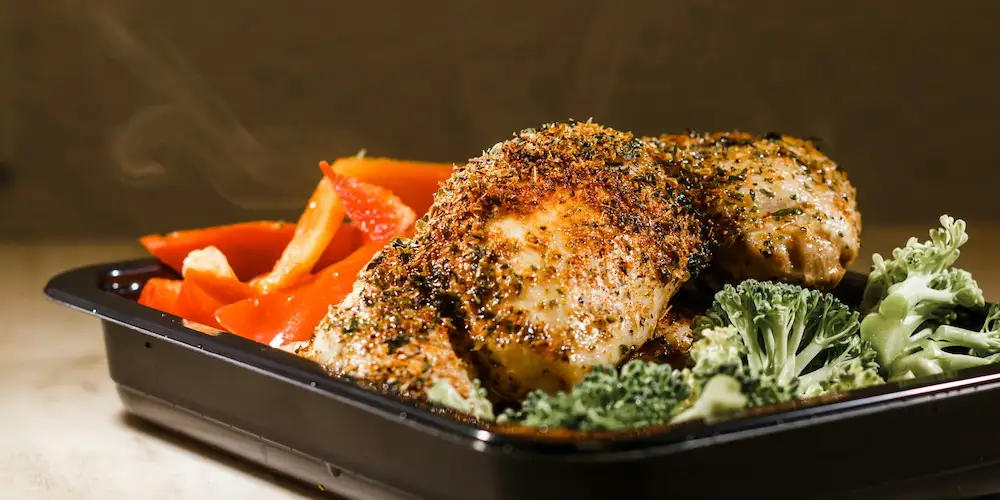
Baked chicken breast pairs naturally with a roasted vegetable side — see also how long to cook potatoes and how long to cook asparagus, two classic oven sides you can roast on the same sheet.
One nuance worth understanding upfront: the chicken is safe once it reaches 165°F (74°C) at the thickest part, but many cooks pull it from the oven a bit earlier, around 155°F (68°C), rather than waiting for the oven itself to hit 165°F (74°C). That isn't a shortcut on safety — a piece of chicken keeps cooking for a few more minutes after it leaves the oven, a "carryover" effect from residual heat still working its way through the meat, and pulling it slightly early lets it finish climbing to a safe 165°F (74°C) on its own during resting, without spending those extra minutes drying out in a hot oven.
Baking Times by Size (at 375°F/190°C)
How long a chicken breast needs in the oven comes down to its size and thickness far more than to any single universal number. At a standard 375°F (190°C), here's what to expect:
| Size | Weight / Thickness | Baking Time |
|---|---|---|
| Small | 4–6 oz (~110–170g), about 0.5in (1.25cm) thick | 20–25 minutes |
| Medium | 6–8 oz (~170–225g), about 0.75in (2cm) thick | 25–30 minutes |
| Large | 8–10 oz (~225–280g), about 1in (2.5cm) thick | 30–35 minutes |
Once you know which row matches your chicken, switch the timer on this page to that value and let it run in the background while you get the rest of the meal together.
Short on time? A hotter oven works too: at 400–425°F (205–220°C), a medium breast is typically done in roughly 20–26 minutes instead of 25–30. Just check it a little sooner than you think — the higher heat leaves less margin before the outside turns tough while the center catches up.
Baking from frozen
You don't have to thaw chicken breast to bake it. Cook it straight from frozen at 400°F (205°C), tented loosely with foil for the first 20 minutes to keep it from drying out, then uncovered for another 15 minutes or more until it reaches 165°F (74°C) at the thickest part. Total time runs noticeably longer than a thawed piece of the same size, so start checking the temperature rather than assuming it's done on the same schedule.
Bone-in vs. boneless
Bone-in chicken breast takes noticeably longer than boneless of the same size, since the bone slows how quickly heat reaches the center. At the same oven temperature, boneless breast is done in roughly 20–25 minutes, while bone-in typically needs 30–40 minutes or more. Treat these as two separate numbers rather than averaging them.
How to Tell When Chicken Breast Is Done
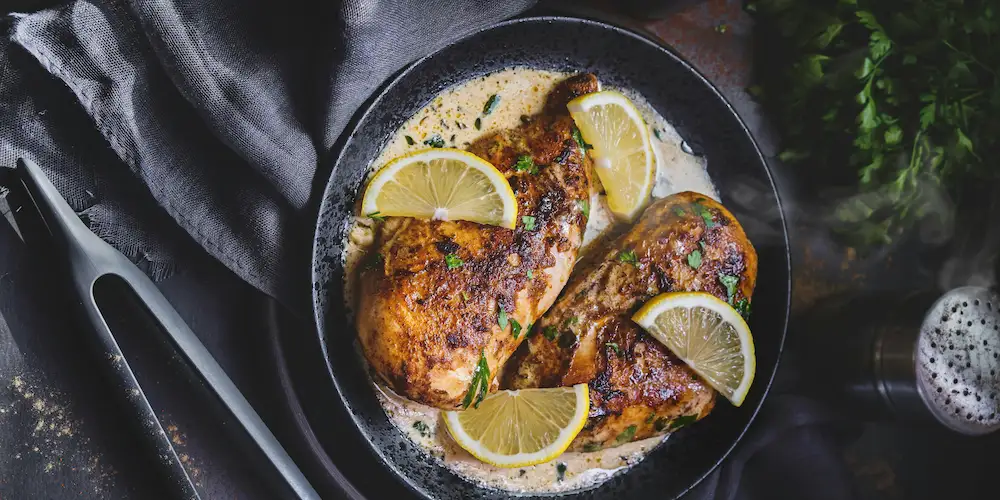
You may have heard that chicken is done once the juices run clear instead of pink when you cut or pierce it. That's a myth, not a reliable test — juice color depends on the meat's pH and leftover myoglobin, not on its actual temperature, so a piece can run clear well before it's safe to eat, or still show a slight pink tinge after it's fully cooked through. The only method that reliably confirms doneness is an instant-read thermometer inserted into the thickest part of the breast, away from any bone.
Useful Tips for Baking Chicken Breast
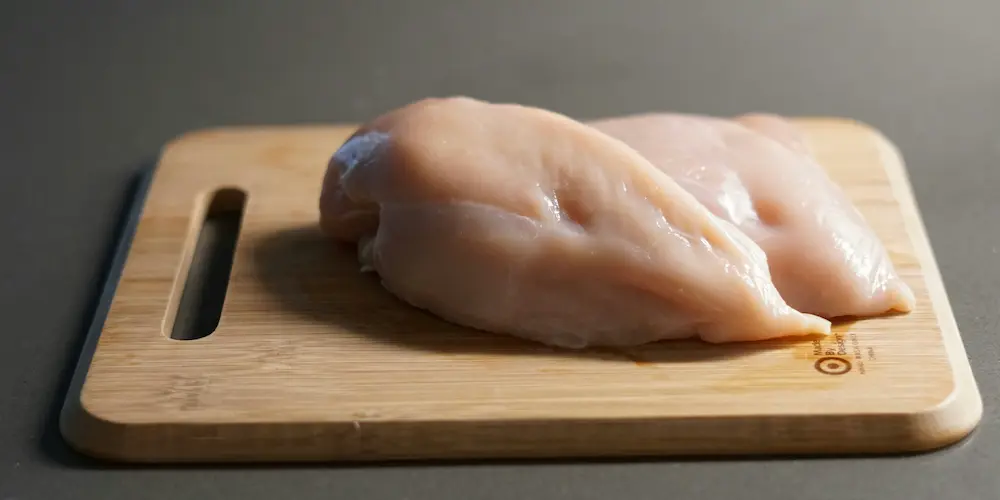
Chicken breast dries out fast, often from just a couple of extra minutes in the oven, and it usually comes down to one of two causes: uneven thickness, where the thin edges finish cooking long before the thick center catches up, and cooking by eye or by the clock instead of checking the actual temperature. Here's what helps.
- Pound it to an even thickness. Place the breast between sheets of plastic wrap and flatten it with a rolling pin or meat mallet to a uniform 0.6in (1.5cm) or so before baking. This is the single most effective fix for uneven cooking, since it stops the edges from overcooking while the center is still catching up.
- Cook to temperature, not to the clock. Times are a starting estimate — a thermometer is what actually tells you it's done, since ovens, pan materials, and starting temperatures all vary.
- Rest it 5–10 minutes before slicing. This is the same window during which the temperature finishes climbing to a safe 165°F (74°C) if you pulled it a touch early, and it also lets the juices redistribute through the meat instead of spilling out onto the cutting board.
- One medium breast is a standard serving. Plan on 6–8 oz (~170–225g) per person as a typical single portion.
- Storing and reheating leftovers: baked chicken breast keeps in an airtight container in the fridge for about 3–4 days, and it freezes well for up to about 3 months. To reheat without drying it out further, warm it gently in a low oven around 300°F (150°C) with a splash of broth, covered, or in a pan over low heat — a high-heat microwave blast toughens already-lean meat fast.

Fact
Chicken breast is one of the leanest, highest-protein foods around: a roughly 3.5oz (100g) portion delivers about 22g of protein at a very low fat content, which is why it's such a staple for meal prep and lean-eating diets.
Baking Several Chicken Breasts at Once for Meal Prep
Baking a batch of chicken breasts on one sheet pan is one of the most common ways to prep protein for the week ahead. Give each piece a little space on the pan rather than crowding them together — air needs to circulate around each one for even browning, and pieces touching or stacked will steam instead of bake. Try to use similarly sized breasts, since a batch of uniform pieces finishes together instead of some being done while others lag behind.
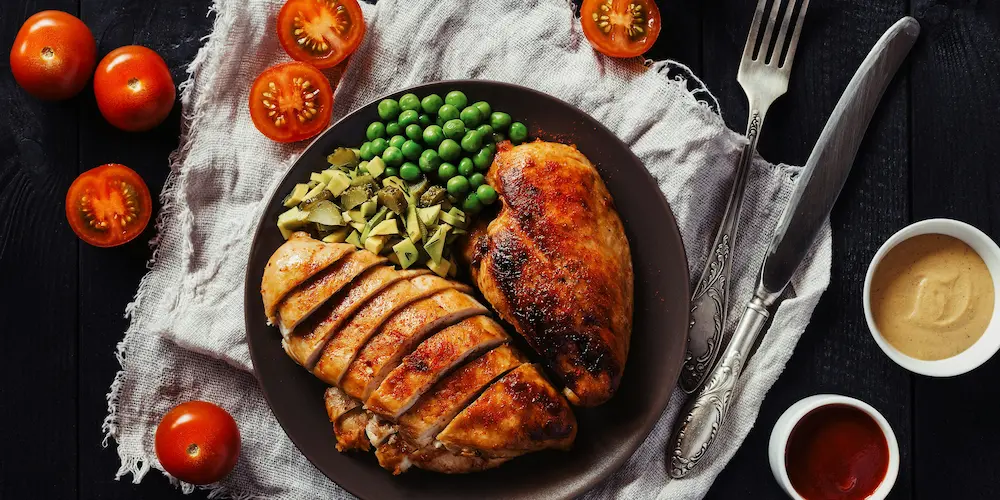
As long as the pan isn't overcrowded, baking multiple breasts doesn't meaningfully change the per-piece time from the size table above — a pan of medium breasts at 375°F (190°C) still lands around 25–30 minutes. Check a couple of the thicker pieces with a thermometer before pulling the whole pan.
Frequently Asked Questions
Here are quick answers to the questions that come up most often when baking chicken breast.
How can you tell chicken breast is done without a thermometer?
You really can't, reliably. Checking whether the juices run clear instead of pink is a common myth — juice color depends on the meat's pH, not its temperature, so it isn't a dependable sign of doneness. An instant-read thermometer inserted into the thickest part is the only method that actually confirms it.
How long do you bake one medium-sized chicken breast?
A medium chicken breast, about 6–8 oz (170–225g), takes roughly 25–30 minutes at 375°F (190°C), or about 20–26 minutes if you raise the oven to 400–425°F (205–220°C).
How do you bake a frozen chicken breast?
Bake it straight from frozen at 400°F (205°C), tented with foil for the first 20 minutes, then uncovered until the center reaches 165°F (74°C), which usually adds 15 minutes or more beyond that. The total time runs noticeably longer than a thawed piece of the same size.
How is the time different for bone-in chicken breast?
Bone-in breast takes longer because the bone slows heat reaching the center. Boneless typically finishes in 20–25 minutes, while bone-in of a similar size needs 30–40 minutes or more at the same oven temperature.
Why does chicken breast turn out dry, and how do you fix it?
It's almost always uneven thickness, where thin edges overcook before the center catches up, or cooking without checking the internal temperature. Pounding the breast to an even thickness before baking and using a meat thermometer instead of guessing solve both problems.
How long should chicken breast rest after the oven?
Let it rest 5–10 minutes before slicing. This lets the juices settle back into the meat, and if you pulled it slightly early, it's also when the temperature finishes rising to a safe level on its own.
Can you bake several chicken breasts on one sheet pan at once?
Yes. Just leave a little space between pieces so they bake rather than steam, and use similarly sized breasts so they finish together. Timing stays close to a single breast's, as long as the pan isn't overcrowded.