How Long to Roast a Whole Chicken?
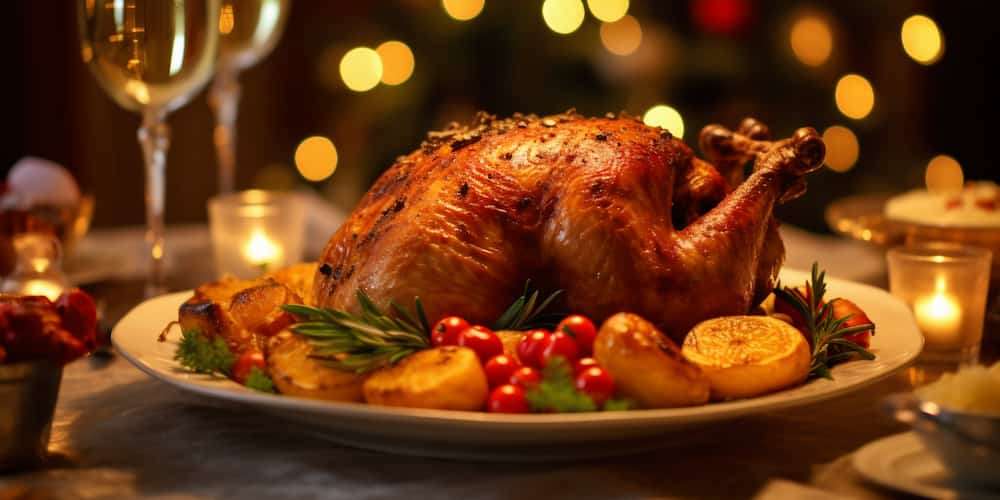
A whole roast chicken is one of the most forgiving dinners you can put in the oven, as long as you go by weight rather than guesswork. At a standard 375°F (190°C), most home-sized birds land somewhere between 1 hour 15 minutes and 2 hours 15 minutes. Weigh your bird, find the matching row below, and set the timer on this page to that value so you're not opening the oven door every ten minutes to check. This guide is specifically about roasting a whole bird in the oven — if you're after just the breast or boiled chicken instead, those work quite differently and are covered in their own guides.
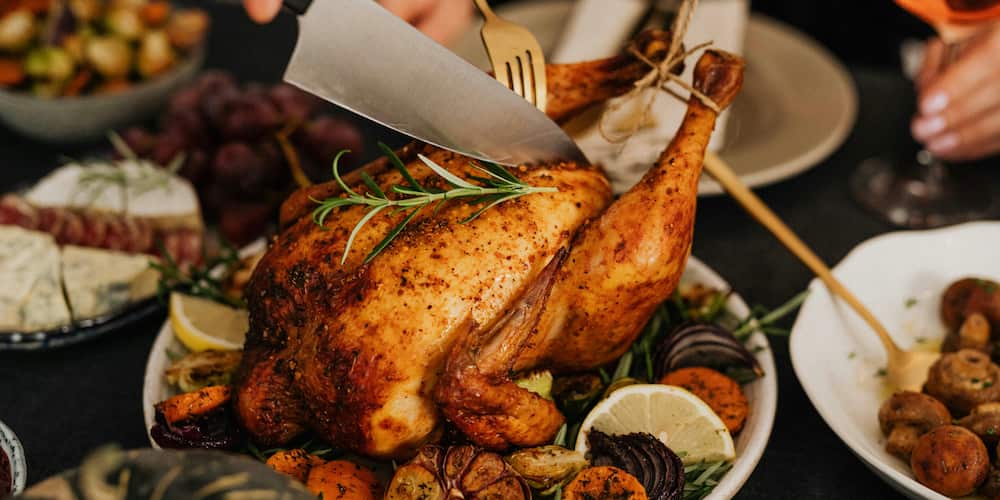
A roast chicken dinner practically asks for classic oven sides — roasted potatoes and roasted asparagus can both go in alongside the bird and come out around the same time, without needing a second dish or a second timer.
Below you'll find times by both oven temperature and bird weight, how to actually confirm doneness, the truth about basting and crispy skin, whether trussing matters, a faster spatchcocked alternative, and what stuffing safety actually requires.
Roasting Times by Weight and Temperature
Two numbers matter here: how much your bird weighs, and how hot your oven runs. As a rule of thumb, figure roughly 17–18 minutes per pound at 375°F (190°C), 15–16 minutes per pound at a hotter 400°F (205°C), or 13–15 minutes per pound if you push the oven to 425°F (220°C). For a bird you're roasting whole and intact, here's what that works out to at the standard 375°F (190°C):
| Bird Weight | Roasting Time (375°F/190°C) | Serves |
|---|---|---|
| 3–4 lb (1.4–1.8kg) | 1h 15m – 1h 30m | About 3 people |
| 4–5 lb (1.8–2.3kg) | 1h 30m – 2h | About 4 people |
| 5–7 lb (2.3–3.2kg) | 2h – 2h 15m | 5–6 people |
Once you've weighed your bird, switch the timer on this page to the value from whichever row matches, and let it run while the oven does the work. Treat both the per-pound rule and the table as a starting point rather than a guarantee — oven calibration, a bird that's cold from the fridge instead of closer to room temperature, and how snugly it fits in your roasting pan can all shift the actual time by ten minutes or more either way.
Checking Doneness the Right Way
The clock gets you close, but an instant-read thermometer is what actually confirms a whole chicken is done. Insert it into the thickest part of the thigh, keeping the tip away from the bone, since touching bone gives a falsely high reading. It should read 165°F (74°C). Check the thickest part of the breast too — thighs and breast don't always finish at exactly the same moment, and you want both there before pulling the bird. Once it's out of the oven, let it rest 10–15 minutes before carving so the juices redistribute through the meat instead of running straight out onto the cutting board.
Does Basting Actually Make the Skin Crispier?
No — and this is worth clearing up, because it's one of the most repeated pieces of advice for roast chicken. Spooning pan juices or fat over the bird partway through roasting doesn't crisp the skin. If anything, it works against you: every time you baste, you're adding moisture right back onto a surface that needs to stay dry in order to brown and crisp properly. Basting can add a bit of surface flavor and color, but it isn't doing what most people think it's doing, and it also costs you oven heat and time every time the door opens.
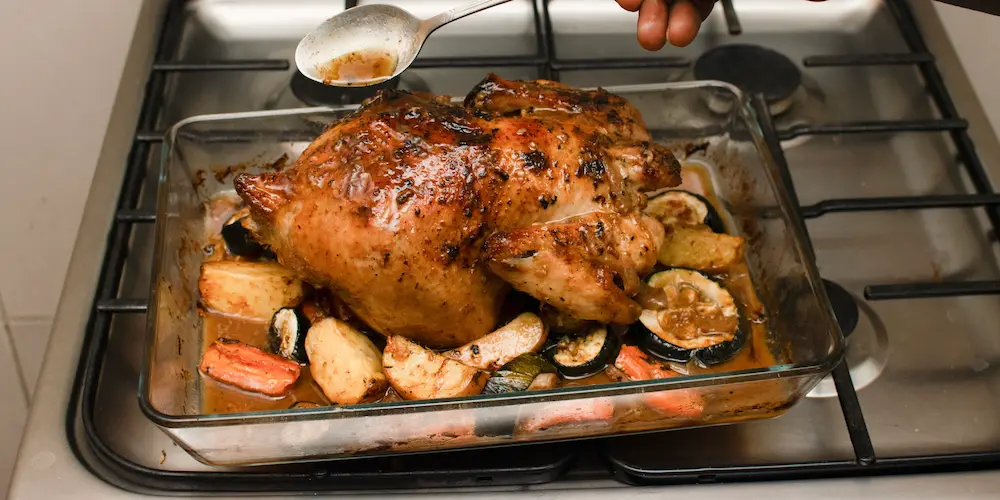
What actually gets you crispy skin comes down to a handful of other things instead. Pat the bird thoroughly dry with paper towels before seasoning — any surface moisture left behind steams the skin rather than letting it crisp. Rub the skin with oil or fat so it renders and browns properly in the oven's heat. Roast at a high enough temperature that the skin actually browns before the meat overcooks. And set the bird on a rack inside the roasting pan, rather than directly on the pan itself, so hot air can circulate underneath as well as over the top — a bird sitting in its own juices on a flat pan will never crisp on the bottom no matter how long it roasts.
Useful Tips for Roasting a Whole Chicken
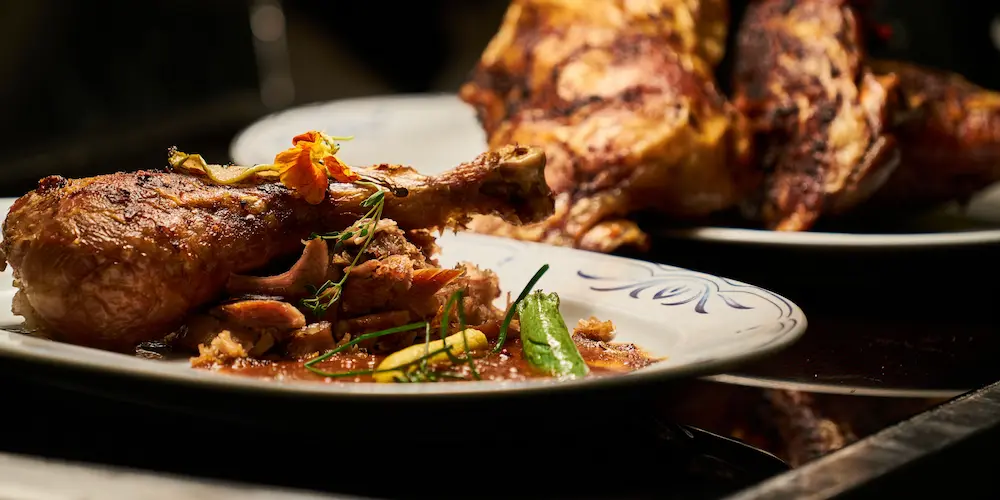
A few habits make a real difference between a good roast chicken and a great one.
- Trussing is optional, not mandatory. Tying the legs and wings close to the body helps the bird hold a more even, compact shape so it cooks more uniformly. That said, several well-known, credible chefs deliberately skip trussing and still get excellent results — untied legs can actually let hot air reach the inner thigh sooner, which some cooks prefer. Truss it if you like a neater presentation; don't feel obligated to.
- Let it approach room temperature first. Taking the bird out of the fridge 30–60 minutes before roasting helps it cook more evenly, since it isn't starting the oven stretch stone cold in the center.
- Season under the skin, not just on top. Loosen the skin over the breast and rub salt, herbs, or butter directly onto the meat underneath for flavor that doesn't just sit on the surface.
- Storing and reheating leftovers: carve the meat off the bone and store it in an airtight container in the fridge for about 3–4 days. It freezes well too, for up to about 4 months. To reheat without drying it out, warm it gently in a low oven around 300°F (150°C), covered or with a splash of broth, rather than blasting it with high heat.

Fact
Breaking the wishbone traces back further than most people realize. The Etruscans first used the bird's fused collarbone, the furcula, for divination without breaking it, and the Romans later turned snapping it between two people into a game of luck, reportedly because there weren't enough wishbones to go around for everyone who wanted a turn. It also pulls apart more easily on a roasted bird than a boiled one, since roasting softens the surrounding meat just enough.
Stuffing a Whole Chicken Safely
Stuffing the cavity adds real flavor, but it changes both the timing and the safety math, so don't treat it as an afterthought. A stuffed bird needs 15–30 minutes longer in the oven than the same bird roasted unstuffed, since the packed stuffing slows how quickly heat reaches the center of the cavity.
The safety part matters more than the extra time: even once the chicken meat itself reads a safe 165°F (74°C) at the thigh, the stuffing packed inside the cavity may still be sitting at a lower temperature, and bacteria can survive there specifically even though the meat around it is fully cooked. Check the stuffing itself with a thermometer, not just the meat, and don't consider the bird done until the stuffing also reaches 165°F (74°C). This is also why the USDA doesn't recommend buying a pre-stuffed raw whole chicken from the store — the stuffing and the bird don't reliably reach a safe temperature together on a normal roasting schedule. For a stuffed bird, give it a separate 20-minute rest before removing the stuffing from the cavity, on top of the usual carving rest for the meat.
Spatchcocking: The Faster Alternative
Spatchcocking means removing the backbone with kitchen shears so the bird opens up and lies flat, and it's worth knowing even if you don't use it every time. A spatchcocked chicken roasts in roughly 45–60 minutes at 425°F (220°C) — about 9–12 minutes per pound — compared to 1 hour 15 minutes to 1 hour 30 minutes for the same size bird left whole and intact.
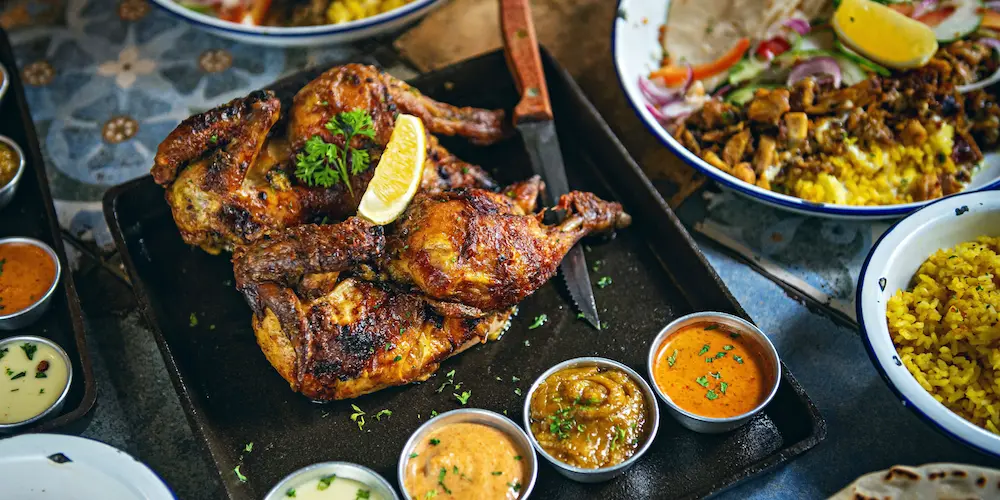
The time savings come from two things working together: an even thickness across the whole bird instead of a thick breast and thin wings finishing at different rates, and far more skin surface exposed directly to the oven's heat for browning. It isn't the only correct way to roast a chicken — a whole intact bird still makes for a nicer table presentation — but it's a genuinely useful technique to reach for on a weeknight when you want dinner on the table faster.
Frequently Asked Questions
Here are quick answers to the questions that come up most often when roasting a whole chicken.
How long do you roast a whole chicken by weight?
At 375°F (190°C), a 3–4 lb (1.4–1.8kg) bird takes about 1h15–1h30, a 4–5 lb (1.8–2.3kg) bird takes 1h30–2h, and a 5–7 lb (2.3–3.2kg) bird takes 2h–2h15. As a rule of thumb, figure roughly 17–18 minutes per pound at that temperature.
Does basting the chicken while it roasts make the skin crispier?
No. Basting adds moisture back onto the skin's surface, which works against crisping rather than for it. Crispy skin comes from patting the bird thoroughly dry before seasoning, rubbing the skin with oil or fat, roasting at a high enough temperature, and setting the bird on a rack so air circulates underneath as well as on top.
Do you need to truss a whole chicken before roasting?
No, trussing is optional. Tying the legs and wings helps the bird hold a neater, more even shape, but plenty of experienced cooks skip it entirely and still get a well-cooked, evenly browned bird.
What is spatchcocking, and is it worth doing?
Spatchcocking means removing the backbone so the bird lies flat, which roughly cuts roasting time in half thanks to even thickness and more exposed skin. It's a genuinely useful technique for a faster weeknight roast, though a whole intact bird still has an edge for table presentation.
How much extra time does a stuffed chicken need, and is it safe?
Add 15–30 minutes over the unstuffed roasting time. Safety-wise, check the stuffing itself with a thermometer separately from the meat, since it can lag behind even after the chicken reaches a safe internal temperature — this is also why the USDA advises against buying pre-stuffed raw chicken from the store.
How long should a roast chicken rest before carving?
Rest it 10–15 minutes before carving so the juices redistribute through the meat instead of spilling out when you cut it. A stuffed bird needs an additional 20-minute rest before you remove the stuffing from the cavity.
How do you get crispy skin on a whole roast chicken?
Pat the bird completely dry with paper towels before seasoning, rub the skin with oil or fat, roast at a high enough oven temperature, and place it on a rack so air reaches the skin from underneath as well as on top. Basting doesn't help and can actually undo some of this by adding moisture back onto the surface.