How Long to Bake Bacon in the Oven?
Baking bacon in the oven is the easiest way to cook a full batch at once without standing over a spattering skillet. Regular-cut strips at 400°F (205°C) are usually done in 10–20 minutes, depending on how crisp you like them, while thick-cut bacon needs longer and a flip partway through. Find your bacon type below and set the timer on this page to match it, so you can walk away and get the rest of breakfast going.
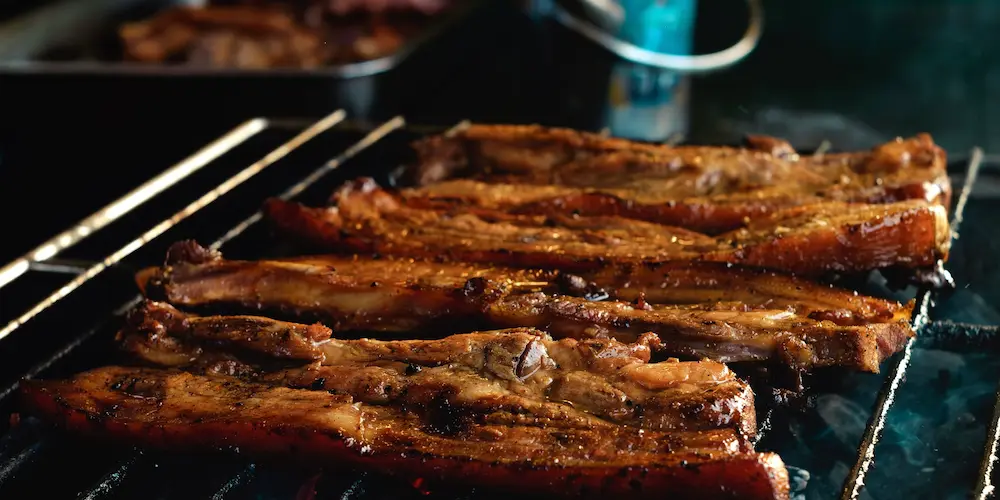
Bacon is practically made for sharing a breakfast plate — pair it with a soft-boiled egg or round out the plate with roasted potatoes, both of which can cook in the same oven window without much extra effort.
This guide covers baking regular and thick-cut bacon in a standard oven, including the cold-oven start, whether a wire rack is really necessary, and what to do with all that leftover fat.
Bacon Baking Times by Thickness (400°F/205°C)
Thickness matters more than any other variable here. A pack of regular-cut bacon and a pack of thick-cut bacon simply don't behave the same way in the oven, even side by side at the same temperature. Regular-cut, sometimes just labeled "bacon," runs about 1/16 inch (1.5mm) thick; thick-cut, usually labeled that way right on the package, is roughly double that at 1/8–3/16 inch (3–4.5mm) — enough of a difference that the same bake time simply doesn't work for both:
| Bacon Type | Oven Temperature | Bake Time |
|---|---|---|
| Regular-cut | 400°F (205°C) | 10–20 minutes, no flip needed |
| Thick-cut | 400°F (205°C) | ~10 minutes, flip, then 10–15 more minutes |
Once you know which row matches your bacon, switch the timer on this page to that value and let it run while you handle the rest of the meal. And don't mix the two on one sheet pan — regular and thick-cut strips cook at different speeds, so by the time the thin slices are perfectly crisp, the thick ones will still be pale and underdone, and pushing everything further to compensate just burns the thin ones.
How Many Strips Per Person
For a standard breakfast portion, plan on about 3–4 strips per person. Scale up from there if bacon is sharing the plate with something heartier, or down slightly if it's more of a side note next to eggs and toast.
Starting in a Cold Oven
Instead of preheating, you can lay the strips on a cold sheet pan, slide it into a cold oven, and only then turn the oven on to 400°F (205°C). It sounds backwards, but it works: because the fat renders gradually as the oven itself climbs to temperature, the strips stay flatter and curl far less than bacon dropped straight into an already-hot oven, where the outside seizes up before the fat has had a chance to render evenly.
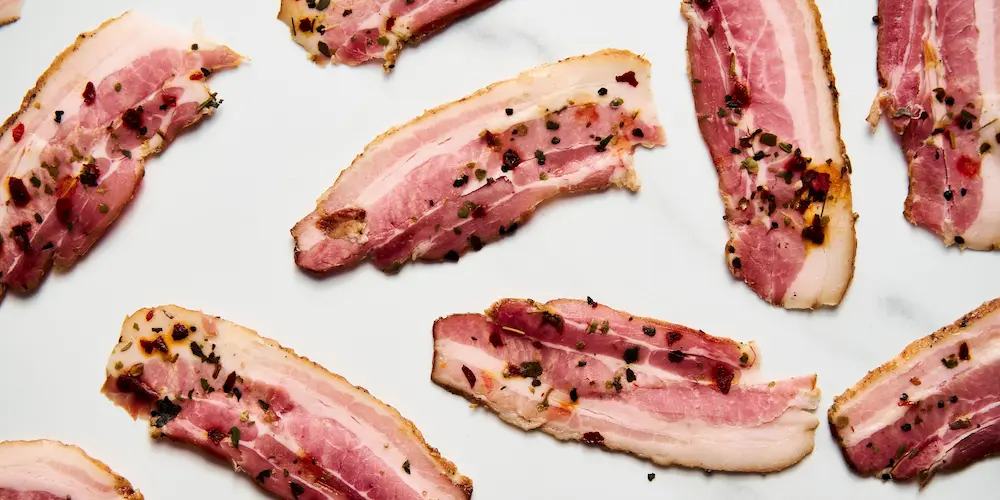
Total time in a cold oven runs about 5 minutes longer than starting in a preheated one, but you also skip the wait for the oven to come up to temperature in the first place — so measured from the moment you turn the oven on to the moment the bacon is done, the two methods land at roughly the same total elapsed time. The cold-oven start is worth it for the flatter strips, not for speed.
Wire Rack or Just a Sheet Pan?
Both work, and neither is a mistake. Setting a wire rack inside the sheet pan lifts the strips so hot air circulates underneath as well as on top, and the rendered fat drips down and away instead of pooling around the meat — the result is more evenly crisp bacon on both sides. Skipping the rack and baking the strips directly on a pan lined with foil or parchment works perfectly well too and means one less thing to wash, but the bacon sits in more of its own fat as it cooks and typically comes out a touch less crisp than the rack version.
Whichever setup you use, avoid the single biggest mistake people make with oven bacon: crowding the pan. Strips that overlap or touch cook unevenly — the exposed edges overcook while the parts pressed against a neighboring strip stay pale and underdone. Lay each strip flat in a single layer with a little breathing room between them.
Treat the times above as a guide rather than a guarantee, too. Ovens run hot or cool by a surprising margin, and thickness varies even within the same package, so go by color and crispness over the clock. If a few strips near the edge of the pan crisp up before the rest, pull those individually with tongs rather than leaving the whole pan in until the slowest strip catches up.
Useful Tips for Baking Bacon
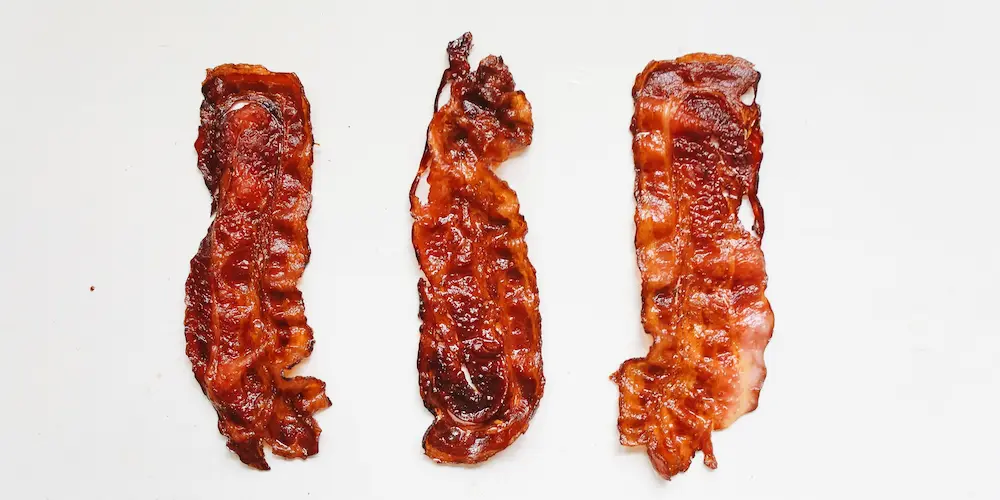
A handful of small habits make oven bacon consistently better, batch after batch.
- Don't overcrowd the pan. One layer, no overlapping strips, is what actually gets you even crispness from edge to edge.
- Line the pan either way. Foil or parchment under the rack (or under the bacon directly, if skipping the rack) makes cleanup dramatically easier, since the rendered fat can otherwise bake onto bare metal.
- Bacon fat isn't the villain it's made out to be. It contains no trans fat and is actually a bit lower in cholesterol than butter, though it's still high in saturated fat — worth knowing so you don't treat a little leftover fat in a recipe as something to panic over, without overdoing it either.
- Storing and reheating leftovers: cooked bacon keeps in an airtight container in the fridge for about 4–5 days, and it freezes well for a couple of months if you layer parchment between the strips so they separate easily later. To reheat, give it a short stint in a low oven around 300°F (150°C) or a quick pass in a dry skillet — a long microwave blast tends to leave it either rubbery or oddly brittle depending on how long it runs.

Fact
Bacon is at least 3,500 years old. Salted, preserved pork belly first shows up as a food-preservation method in ancient China, long before curing meat became a staple technique across Europe.
Don't Pour Bacon Fat Down the Drain
Rendered bacon fat is liquid and harmless-looking straight out of the oven, but it solidifies as it cools — and if it's already in your pipes when that happens, it clogs them. Never pour hot fat down the sink.
Instead, let it cool and solidify right in the pan or a heatproof container, then scrape it into the trash. If you'd rather keep it for cooking, freeze it in small portions — an ice cube tray works well — so you can pull out just what a recipe calls for later. For fat you plan to reuse sooner, strain it through a fine sieve or a layer of cheesecloth to remove any stray bits, then refrigerate it; it'll keep for a few weeks and adds a savory depth to roasted vegetables, fried eggs, or cornbread.
Frequently Asked Questions
Here are quick answers to the questions that come up most often when baking bacon in the oven.
How long do you bake regular bacon vs. thick-cut bacon?
Regular-cut bacon bakes at 400°F (205°C) for about 10–20 minutes with no flip needed, depending on how crisp you want it. Thick-cut bacon needs a flip partway through: roughly 10 minutes on the first side, then another 10–15 minutes after flipping.
Can you put bacon in a cold oven, and why would you?
Yes — lay the strips on a sheet pan, put the pan in a cold oven, then turn the oven on. The fat renders gradually as the oven heats up, which keeps the strips flatter with much less curling than bacon dropped into an already-hot oven.
Do you need a wire rack to bake bacon?
No, but it helps. A rack lifts the strips so air circulates and fat drips away, giving more even crispness on both sides. Baking directly on a lined sheet pan works fine too, just with slightly less crisp results since the bacon sits in more of its own fat.
Why doesn't my bacon come out crispy?
The most common cause is an overcrowded pan — strips that overlap or touch cook unevenly, with the pressed-together parts staying underdone. Give each strip a little space in a single layer, and pull strips individually once they hit the crispness you want rather than waiting for the whole pan.
Can you reuse bacon fat after baking, and how do you store it?
Yes. Let it cool until it solidifies, then either scrape it into the trash, freeze it in small portions like an ice cube tray for later cooking, or strain it through a fine sieve or cheesecloth and refrigerate it for a few weeks of reuse. Never pour hot fat down the sink, since it solidifies inside the pipes and clogs them.
What's the best oven temperature for baking bacon?
400°F (205°C) is the standard temperature for both regular and thick-cut bacon, giving a good balance between rendering the fat fully and getting crisp edges without burning the strips before the centers catch up.
How many strips of bacon should you plan per person?
Plan on about 3–4 strips per person for a standard breakfast portion, adjusting up or down depending on what else is on the plate.