Curious about making the perfect poached egg?

Poached eggs work for breakfast, brunch, and even dinner. They can seem tricky, but with a bit of practice and the timer on this page, you'll find them simple to make. This article covers the ingredients, the method, and the time for each type of yolk.
Prefer them boiled? See how long to boil a soft-boiled egg and how long to boil hard-boiled eggs.
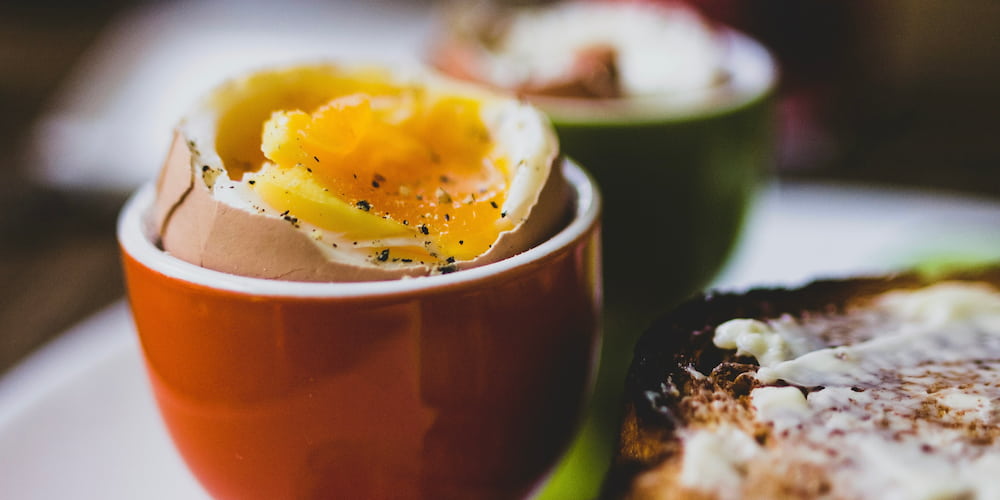
A poached egg is cooked by gently simmering it in water, without the use of oil or fat, which preserves the egg's natural flavor and texture. The goal is to achieve a tender white and a runny yolk. Serve it in classic eggs Benedict, on a salad, or simply on toast. Here's how to make poached eggs at home, step by step.
Poached egg ingredients
To start, you'll need a few basic ingredients:
- Fresh eggs (the fresher, the better)
- Water
- A splash of vinegar (optional, but helps the egg whites set)
- Salt (for seasoning)
Poached egg procedure
Follow these steps to achieve perfectly poached eggs:
- Fill a medium-sized saucepan with about 3 inches of water. Add a splash of vinegar to help the egg whites coagulate.
- Heat the water over medium heat until it reaches a gentle simmer. Avoid a rolling boil as it can cause the eggs to break apart.
- Crack an egg into a small bowl or cup. This makes it easier to slide the egg gently into the water.
- Stir the simmering water with a spoon to create a gentle whirlpool. This helps the egg white wrap around the yolk.
- Slowly slide the egg into the center of the whirlpool. Let it cook undisturbed for about 3-4 minutes for a runny yolk or a bit longer if you prefer a firmer yolk.
- Using a slotted spoon, carefully remove the egg from the water and place it on a paper towel to drain off excess water.
- Season with salt and serve immediately.
Poached egg time chart
Cooking times by type of yolk:
- Soft yolk: 3 minutes
- Medium yolk: 4 minutes
- Firm yolk: 5 minutes

Try different timings to find what works best for you, and set the timer on this page to your preferred time.
How long should you cook eggs?
The cooking time depends on whether you want a soft, medium, or hard result. The chart below covers boiled eggs at different degrees of doneness, as well as poached eggs. Set the timer on this page to the time you need. For boiled eggs, measure the time from the moment the water comes to a boil.
| Cooking Time (minutes) | Degree of Doneness |
|---|---|
| ≈3 minutes | Poached egg, without shell |
| 3 minutes | Soft-boiled egg with runny yolk |
| 4 minutes | Medium-soft-boiled egg |
| 5 minutes | Soft-boiled egg with a slightly firmer yolk |
| 6 minutes | Soft-boiled egg with a more set yolk |
| 7 minutes | Medium-boiled egg with a firm yolk |
| 9 minutes | Hard-boiled egg with a creamy yolk |
| 12 minutes | Fully cooked egg with a hard yolk |
Methods for Cooking Boiled Eggs

Here are a few popular ways to boil eggs:
- Classic Boiling Method
Place a pot of water on medium heat and bring it to a boil. Carefully lower the eggs into the boiling water using a spoon or a slotted utensil. Cook the eggs for the required time (refer to the chart above). Once cooked, transfer the eggs to a bowl of cold water to stop the cooking process.
- Heat-Off Method
Bring the water in the pot to a boil. Gently add the eggs to the boiling water. Turn off the heat and cover the pot with a lid. Let the eggs sit in the residual heat until they reach the desired level of doneness.
- Cold Water Start Method
Place the eggs in a pot and cover them with cold water. Set the pot on medium heat and bring the water to a boil. After boiling, cook the eggs for the specified time. Transfer the eggs to a bowl of cold water to halt the cooking process.

Fact
Poached eggs and Eggs Benedict are often confused, but they are not the same. Poaching is a cooking method where the egg is cooked without its shell in water until it reaches the desired consistency. Eggs Benedict, on the other hand, is a dish that includes a poached egg served on an English muffin with bacon and topped with hollandaise sauce. There are also many variations of Eggs Benedict with different toppings and sauces.

Useful Tips and Hacks
A few tips to make boiling and poaching eggs easier:
- How to Make Eggs Easy to Peel
To make peeling eggs easier after boiling, add a little vinegar or salt to the water before it starts boiling. It is also recommended to cool the eggs in cold water immediately after cooking, which helps to separate the shell from the white.
- How to Boil Quail Eggs
Quail eggs require a bit less time to cook compared to chicken eggs. For soft-boiled quail eggs, cook them for 2-3 minutes, and for hard-boiled, 4-5 minutes. As with chicken eggs, cooling them in cold water helps to peel them more easily.
- How to Properly Store Boiled Eggs
Boiled eggs should be stored in the refrigerator. If you plan to keep them in their shells, they can last up to a week. If the eggs are already peeled, it's best to use them within 3-4 days. Make sure they are stored in an airtight container to prevent them from absorbing any odors.
- How to Avoid Cracks on the Shell During Boiling
To prevent cracks on the shell, gently lower the eggs into the water using a spoon and avoid sudden temperature changes. Start boiling with cold water and gradually bring it to a boil.
- How to Achieve the Perfect Poached Egg
For the best results when making poached eggs, use the freshest eggs possible. Fresh eggs have a firmer white that holds its shape better during cooking. Adding a tablespoon of vinegar to the water also helps the white to coagulate faster and maintain its shape.
FAQs
Answers to common questions about cooking and storing eggs.
What ingredients are needed for a poached egg?
For a poached egg, you need an egg, water, and optionally a bit of vinegar. The vinegar helps the egg white coagulate and hold its shape during cooking without the shell.
How do you serve a poached egg?
Serve a poached egg on toast or an English muffin, often topped with sauces like Hollandaise or tomato-based sauces, and garnished with items such as spinach or bacon.
How many calories are in a poached egg?
A poached egg contains approximately 70 calories.
How can you tell if eggs are fresh?
Put the egg in a bowl of water. Fresh eggs sink and lie flat on the bottom, older eggs stand upright, and eggs that float are too old to use.
Can you microwave poached eggs?
Yes, you can microwave poached eggs. Crack the egg into a microwave-safe cup or bowl, add a small amount of water and a splash of vinegar, then microwave on high for about 1 minute, or until the white is set.
What are some tips for making poached eggs?
Use the freshest eggs possible for best results. Adding vinegar to the water helps the egg white set more quickly. Also, creating a gentle whirlpool in the water before adding the egg can help it maintain a neat shape.